
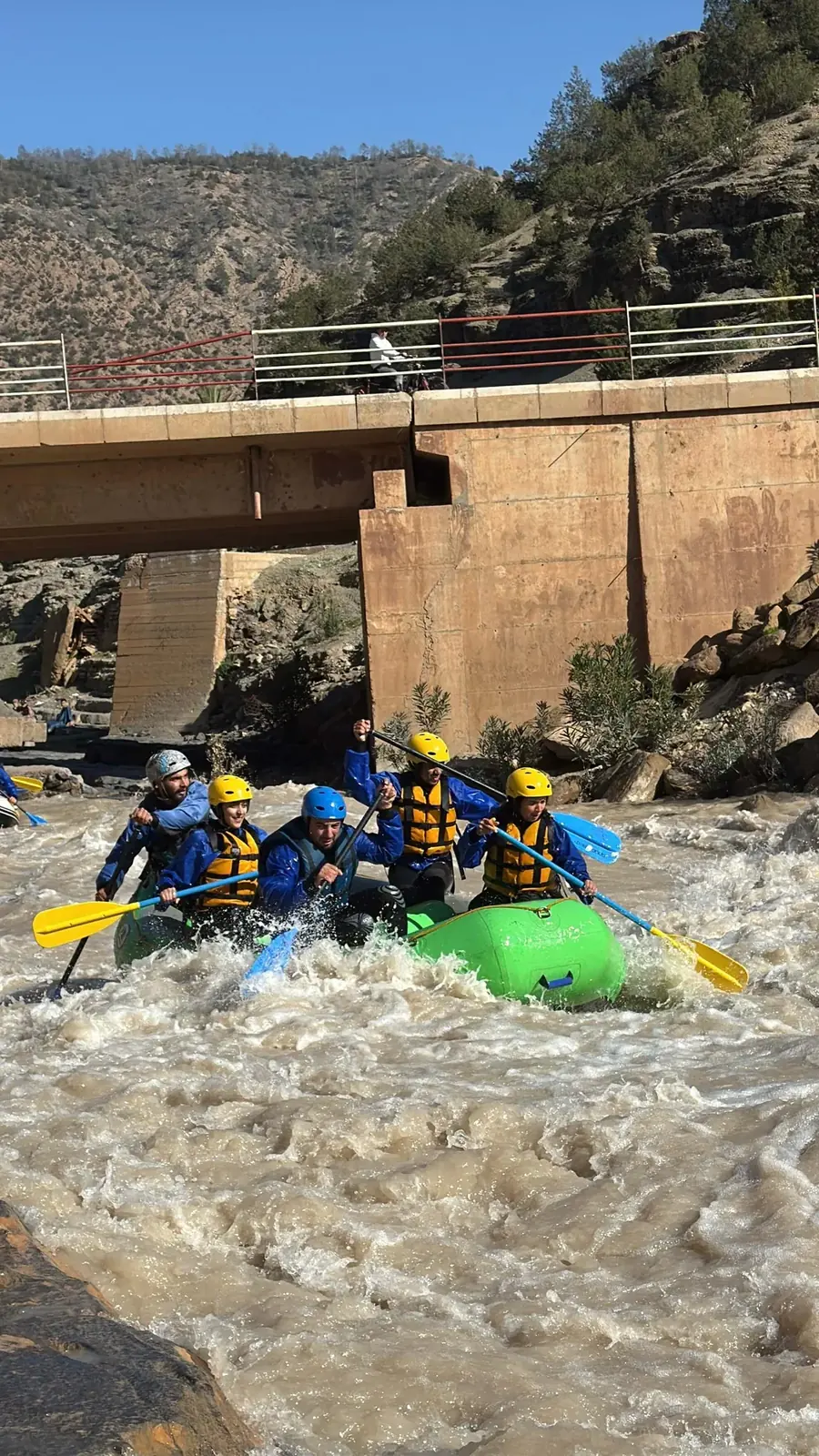
Rafting on the Ahansal River is a seasonal mountain experience, not a guaranteed year-round attraction. This practical guide explains the best planning window, river grades, safety equipment and what to confirm before travelling.
A river shaped by the High Atlas
The Ahansal comes from mountain country around Taghia and Zaouiat Ahansal, flows through gorges and valleys and eventually reaches the Bin El Ouidane reservoir. Snowmelt, rainfall and upstream weather strongly influence the flow. A section that was suitable last weekend may be too low or too powerful the next weekend. The river is not controlled by a fixed tourist timetable.
That changing character is part of its appeal. A guided descent is an opportunity to experience the landscape from the water, understand how a river behaves and share the journey with a team rather than simply chase dramatic photographs.
When should you plan your trip?
March through June is usually the period worth checking with local operators. Some years offer possible descents into July, whereas others finish earlier. Neither a month name nor a social-media video can confirm the conditions for a particular date. Recent rain, mountain snow and the selected section all matter.
If you are organising a longer Morocco trip, keep your schedule flexible. Confirm the conditions close to the day, and have another Atlas activity in mind if the river cannot safely be navigated. Hiking, mountain biking or a village visit are good alternatives.
What do rapid grades mean?
Whitewater is often classified from I to VI. Grade I is relatively easy moving water; II requires basic manoeuvres; III includes more demanding rapids; IV brings stronger, more complex passages. Grades V and VI describe very serious or extreme conditions, not ordinary sightseeing.
A grade is not a permanent label for an entire river. Water level, obstacles, visibility and the precise stretch change the challenge. The guide must assess the real situation and choose a route suited to the group rather than promise a particular grade in advance.
A guided trip, from briefing to finish
Before boarding, expect a welcome, equipment fitting and a safety briefing. Participants should learn paddle commands, where to sit, how to respond as a team and what to do if someone enters the water. Tell your guide about relevant limitations and your comfort in moving water. Listening and teamwork matter more than bravado.
Distance and time on the water vary according to the stretch, the conditions and the group. Transport between the put-in and take-out can add time, so ask for a complete plan rather than just the stated duration of paddling.
What to wear and bring
A correctly fitted buoyancy aid and helmet are essential where required by the conditions and operator. Wear shoes that stay secure when wet, suitable layers, sun protection and bring dry clothes for later. Keep valuable electronics protected or leave them behind. Follow the operator’s equipment instructions rather than bringing unsuitable gear.
You do not need to claim advanced skills to enjoy a well-chosen beginner-friendly section. What matters is an honest conversation about previous experience and a route that genuinely fits the participants.
Where to meet and what to confirm
Imsfrane in the Tilouguite commune of Azilal province is a base for discovering the Ahansal valley. The actual meeting point depends on the river section and transport arrangements. Mountain roads, transfers and the return journey should be included when planning the day.
Before paying or booking accommodation, confirm the start point, the equipment included, guide arrangements, transport, expected difficulty, total price and how weather-related changes are handled.
Travel with care
Bring your rubbish back, respect village access, do not disturb wildlife and follow local guidance near the riverbanks. Safe choices matter more than completing a descent at any cost.
If conditions are right, the Ahansal can be unforgettable. If they are not, a flexible visit still offers mountains, trails and local hospitality.